
The maximum load an umbrella middle pole can bear is a crucial factor that directly impacts the functionality, durability, and safety of umbrellas. As a supplier of umbrella middle poles, understanding this aspect is essential for providing high - quality products to our customers.
Factors Affecting the Maximum Load
Several factors play significant roles in determining the maximum load an umbrella middle pole can bear.
Material
The material of the middle pole is one of the most important factors. Commonly used materials include aluminum, fiberglass, and wood. Aluminum poles are lightweight, corrosion - resistant, and have good strength - to - weight ratios. For example, high - grade aluminum alloys can withstand relatively large loads due to their inherent strength. An Aluminum Outdoor Umbrella with a well - crafted aluminum middle pole can support a decent amount of weight, whether it's from the canopy, wind pressure, or additional accessories.
Fiberglass poles are known for their flexibility and high tensile strength. They can bend under stress without breaking, which is an advantage in windy conditions. However, their load - bearing capacity may be limited compared to some aluminum poles, especially when it comes to static loads.
Wooden poles offer a classic and aesthetically pleasing look. But their load - bearing capacity can vary greatly depending on the type of wood. Hardwoods like teak or oak are stronger and can bear more weight than softwoods. However, wood is also more susceptible to moisture damage, which can weaken its structure over time.
Design and Structure
The design of the middle pole, such as its diameter, wall thickness, and internal structure, has a direct impact on its load - bearing capacity. A thicker - walled pole generally has a higher maximum load than a thinner - walled one. For instance, a pole with a larger diameter and a thicker wall can distribute the load more evenly, reducing the stress on any single point.
Some middle poles are designed with internal reinforcements, such as ribs or cross - braces. These reinforcements can significantly increase the pole's strength and stiffness, allowing it to bear heavier loads. Additionally, the way the pole is connected to the umbrella canopy and base also affects its load - bearing capacity. A well - designed connection ensures that the load is transferred smoothly from the canopy to the pole and then to the base.
Environmental Conditions
The environment in which the umbrella is used also affects the maximum load the middle pole can bear. Wind is one of the most significant environmental factors. Strong winds can exert a large lateral force on the umbrella, putting extra stress on the middle pole. An umbrella placed in an open and exposed area, such as a beach or a large field, is more likely to experience high - wind conditions compared to one placed in a sheltered garden.
Rain and snow can also add weight to the umbrella canopy. A wet canopy can become significantly heavier, increasing the load on the middle pole. In areas with heavy snowfall, the accumulated snow on the canopy can pose a serious threat to the pole's integrity if it exceeds the pole's maximum load capacity.
Testing the Maximum Load
To determine the maximum load an umbrella middle pole can bear, we conduct a series of rigorous tests.
Static Load Testing
In static load testing, we apply a gradually increasing vertical load to the top of the middle pole while the pole is firmly fixed at the base. We use calibrated weights or hydraulic presses to apply the load accurately. The test continues until the pole shows signs of deformation or failure, such as bending, cracking, or breaking. The maximum load at which the pole fails is recorded as its static load - bearing capacity.
Dynamic Load Testing
Dynamic load testing simulates real - world conditions, such as wind gusts. We use specialized equipment to create oscillating or sudden - impact loads on the middle pole. This type of testing helps us understand how the pole responds to changing loads over time. For example, a wind simulator can create variable wind speeds and directions, allowing us to observe how the pole behaves under different wind conditions.
Environmental Simulation Testing
We also conduct environmental simulation testing to evaluate the pole's performance under different environmental conditions. For example, we can simulate rainy conditions by spraying water on the umbrella canopy while applying a load to the middle pole. This helps us understand how moisture affects the pole's load - bearing capacity.
Applications and Requirements
Different types of umbrellas have different requirements for the maximum load of the middle pole.
Outdoor Umbrellas with Bases
Outdoor Umbrella with Base are commonly used in patios, restaurants, and outdoor events. These umbrellas are often larger in size and need to withstand various environmental conditions. The middle pole of an outdoor umbrella with a base should be able to bear the weight of the large canopy, as well as the forces exerted by wind and rain. A high - quality middle pole for an outdoor umbrella should have a relatively high maximum load capacity to ensure its long - term stability and safety.

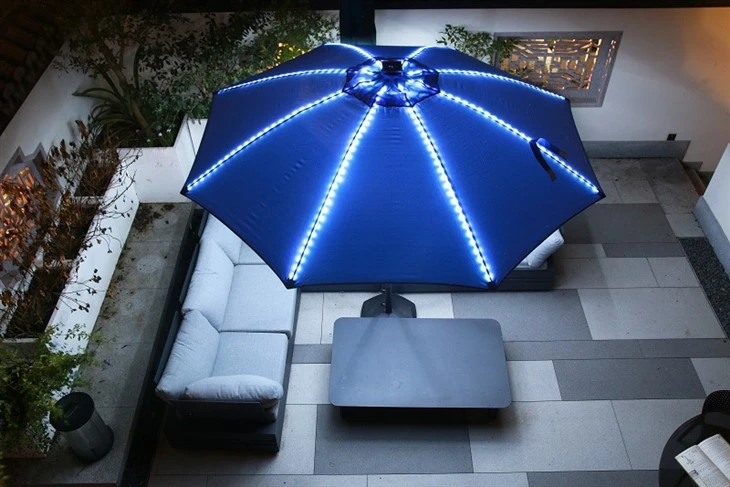
Garden Parasols with Bases
Garden Parasol With Base are usually smaller in size compared to outdoor umbrellas. However, they still need to be able to withstand the environmental conditions in a garden, such as gentle winds and occasional rain. The middle pole of a garden parasol should be strong enough to support the canopy and any additional accessories, such as lights or wind - breakers.
Importance of Knowing the Maximum Load
Knowing the maximum load an umbrella middle pole can bear is crucial for both manufacturers and users.
For manufacturers, it helps in product design and quality control. By understanding the load - bearing capacity of the middle pole, we can design umbrellas that meet the specific needs of different customers. We can also ensure that our products comply with relevant safety standards and regulations.
For users, knowing the maximum load helps in making informed purchasing decisions. Customers can choose an umbrella with a middle pole that can handle the environmental conditions in their area. This ensures that the umbrella will be safe and durable, reducing the risk of damage or injury caused by overloading the pole.
Conclusion
As a supplier of umbrella middle poles, we are committed to providing products with high load - bearing capacities. Our in - depth understanding of the factors affecting the maximum load, combined with our rigorous testing procedures, allows us to offer middle poles that meet the diverse needs of our customers.
Whether you are looking for an Outdoor Umbrella with Base, an Aluminum Outdoor Umbrella, or a Garden Parasol With Base, we have the right middle pole for you. If you are interested in purchasing our umbrella middle poles or have any questions about their load - bearing capacities, please feel free to contact us for further discussion and procurement negotiation.
References
- "Structural Analysis of Umbrella Poles under Wind Loads", Journal of Outdoor Product Engineering
- "Materials for Umbrella Poles: Properties and Performance", International Journal of Material Science
- "Testing Standards for Umbrella Load - Bearing Capacity", National Umbrella Manufacturing Association