
Hey there! As a supplier of garden extendable tables, I've heard from many customers about the struggle of dealing with uneven surfaces when setting up their tables. It can be super frustrating, right? But don't worry, I'm here to share some tips on how to adjust the balance of a garden extendable table on an uneven surface.
First off, let's talk about why it's important to get your table balanced. An unbalanced table not only looks bad but can also be a safety hazard. It might wobble, making it easy for drinks and food to spill. And if it's really unsteady, it could even tip over, which is definitely not what you want when you're having a nice outdoor meal or gathering with friends and family.
Now, before we start adjusting, take a good look at the surface where you want to place your table. Is it a patio with some small bumps? Or maybe it's a grassy area with an uneven slope? Knowing the type of unevenness will help you choose the right method to balance the table.

Using Shims
One of the simplest and most common ways to balance a table on an uneven surface is by using shims. Shims are small, thin pieces of material that you can place under the table legs to raise them up and level the table. You can find shims at most hardware stores. They come in different materials like wood, plastic, or rubber.
If you're using a wooden shim, make sure it's dry and free from any splinters. Plastic shims are great because they're lightweight and won't rot. Rubber shims, on the other hand, provide a bit of extra grip, which can be useful on slippery surfaces.
To use shims, start by placing the table on the uneven surface. Then, see which leg or legs are not touching the ground properly. Take your shim and slide it under the short leg. You might need to try a few different thicknesses of shims to get the table perfectly level. Once you've found the right fit, make sure the shim is firmly in place.
Adjustable Table Legs
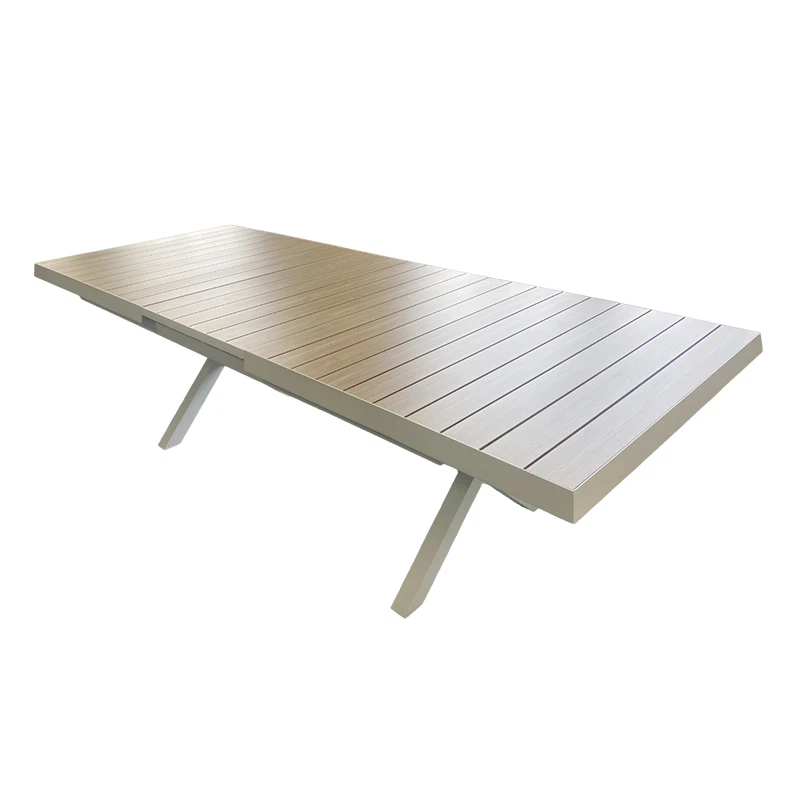
Many of our Folding Extendable Garden Table come with adjustable legs. This is a really handy feature when dealing with uneven surfaces. The adjustable legs usually have a screw mechanism that allows you to lengthen or shorten the leg as needed.
To adjust the legs, first, place the table on the surface and see which legs need to be adjusted. Then, use a wrench or a screwdriver (depending on the type of adjustment mechanism) to turn the screw on the leg. If the leg needs to be longer, turn the screw clockwise. If it needs to be shorter, turn it counterclockwise. Keep checking the level of the table as you make adjustments until it's perfectly balanced.
Leveling Pads
Leveling pads are another great option for balancing a table on an uneven surface. These pads are usually made of rubber or plastic and have a flat bottom that can conform to the unevenness of the ground. They come in different sizes, so you can choose the ones that are suitable for your table legs.
To use leveling pads, simply place one under each table leg. The pads will automatically adjust to the shape of the surface and help to level the table. They're easy to use and can be a quick fix for minor unevenness.
Using Sandbags or Weights
If the table is still a bit wobbly after using shims, adjustable legs, or leveling pads, you can try using sandbags or weights. This method works well on grassy or soft surfaces where the table might sink a bit.
You can place sandbags or other heavy weights on the corners of the table. Just make sure the weights are evenly distributed so that they don't cause the table to tip in one direction. This will add some stability and help to keep the table balanced.
Checking the Table Structure
Sometimes, the problem might not be with the surface but with the table itself. Before you start adjusting the balance, take a look at the table structure. Make sure all the joints are tight and there are no loose parts. If you find any loose screws or bolts, tighten them up. A well - constructed table is more likely to stay balanced on an uneven surface.
For Larger Tables
If you have a 12 Seater Extendable Aluminium Garden Table or a Large Extendable Outdoor Dining Table, the process of balancing can be a bit more challenging. These tables are heavier and have more legs, so it's important to make sure all the legs are evenly supported.
You might need to use a combination of the methods mentioned above. For example, start by using adjustable legs to get a rough level, then use shims to fine - tune the balance. And don't forget to check the table from different angles to make sure it's completely stable.
In conclusion, balancing a garden extendable table on an uneven surface doesn't have to be a headache. With a little patience and the right tools, you can get your table perfectly level and ready for use. Whether you're using shims, adjustable legs, leveling pads, or a combination of these methods, the key is to take your time and make sure the table is stable.
If you're in the market for a new garden extendable table or have any questions about balancing your existing one, feel free to reach out. We're always here to help you find the perfect table and make sure you have a great outdoor dining experience.
References
- General knowledge from years of experience as a garden extendable table supplier.
- Advice from professional carpenters and outdoor furniture experts.