

As a seasoned supplier of aluminum outdoor umbrellas, I often receive inquiries from customers about the feasibility of using these umbrellas during the winter months. This topic is not only relevant for those looking to extend the functionality of their outdoor spaces year - round but also crucial for understanding the durability and adaptability of our products. In this blog, I'll delve into the factors you need to consider when deciding whether to use an aluminum outdoor umbrella in winter.
Understanding the Properties of Aluminum
Aluminum is a popular material for outdoor umbrellas due to its numerous advantages. It is lightweight, which makes it easy to move the umbrella around the patio or garden. At the same time, it is highly resistant to corrosion. Unlike iron or steel, aluminum does not rust when exposed to moisture, a property that is particularly important in winter when there could be snow, ice, or rain.
However, aluminum does have its limitations in cold weather. The metal can become brittle at extremely low temperatures. According to materials science research, as the temperature drops, the ductility of aluminum decreases, and its susceptibility to cracking under stress increases. This means that if your area experiences very cold winters with heavy snowfall or strong winds, the aluminum parts of the umbrella, such as the Umbrella Middle Pole, could be at risk of damage.
Weather Conditions in Winter
The suitability of using an aluminum outdoor umbrella in winter largely depends on the local weather conditions.
Snow
Snow can pose a significant challenge. The weight of accumulated snow on the umbrella canopy can put a lot of stress on the frame. If the snow is wet and heavy, it can cause the umbrella to bend or even break. In regions where snowfall is common, it is advisable to remove the snow from the umbrella regularly. If possible, you can also tilt the umbrella slightly to prevent snow from piling up in one place.
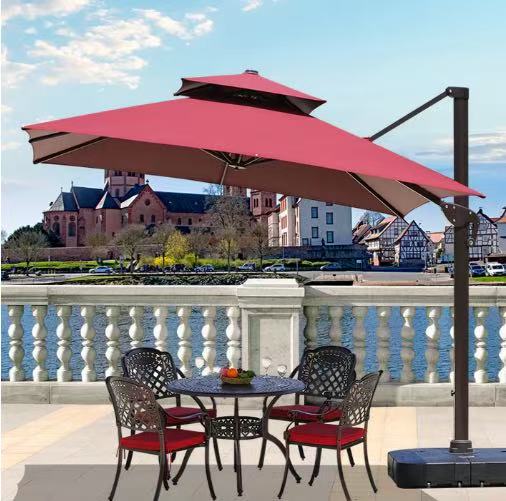

Rain and Freezing Temperatures
Rain followed by freezing temperatures can lead to the formation of ice on the umbrella. Ice can add extra weight and also cause the metal parts to contract unevenly. This can result in structural damage to the umbrella. If you expect freezing rain, it is best to store the umbrella indoors.
Wind
Winter winds can be strong and gusty. Aluminum umbrellas, while generally sturdy, can be blown over by high - velocity winds. A well - anchored umbrella is essential. You can use heavy - duty umbrella bases to keep the umbrella stable. However, in areas prone to severe winter storms with strong winds, it might be safer to take the umbrella down and store it until the weather improves.
Canopy Considerations
The canopy of the aluminum outdoor umbrella is another important factor. Most canopies are made of fabric, which can also be affected by winter weather.
In cold temperatures, the fabric can become stiffer and more prone to tearing. If there is a lot of snow or ice on the canopy, the fabric may not be able to stretch to accommodate the weight, leading to rips. Additionally, prolonged exposure to moisture can cause the fabric to mildew, especially if it doesn't dry properly.
Some of our Patio Umbrella Outdoor models come with treated canopies that are more resistant to water and mildew. These canopies are a better choice for winter use, but it is still important to take proper care of them.
Maintenance Tips for Winter Use
If you decide to use your aluminum outdoor umbrella in winter, proper maintenance is crucial.
- Regular Inspections: Check the umbrella regularly for any signs of damage, such as cracks in the aluminum frame or tears in the canopy. Early detection can prevent further damage.
- Cleaning: Keep the umbrella clean. Remove any dirt, leaves, or debris that may accumulate on the canopy and frame. This will help prevent the growth of mold and mildew.
- Lubrication: Apply a small amount of lubricant to the moving parts of the umbrella, such as the joints and hinges. This will ensure smooth operation and prevent the parts from seizing up in the cold.
Alternatives to Winter Use
If the winter conditions in your area are too harsh for your aluminum outdoor umbrella, you may consider alternative options.
One option is to use a Straw Outdoor Sunshade Umbrella. These umbrellas are made of natural materials and can add a rustic charm to your outdoor space. They are also relatively lightweight and can be easily stored indoors during the winter.
Another alternative is to invest in a winter - specific outdoor shelter. There are various types of winter shelters available on the market, such as gazebos with insulated walls, which can provide better protection from the cold and harsh weather.
Conclusion
In conclusion, using an aluminum outdoor umbrella in winter is possible, but it requires careful consideration of the local weather conditions and proper maintenance. If you live in an area with mild winters, you can safely use your umbrella with some precautions. However, in regions with severe winter weather, it may be better to store the umbrella indoors to avoid damage.
As a supplier of high - quality aluminum outdoor umbrellas, we are committed to providing you with the best products and advice. If you have any questions about using our umbrellas in winter or are interested in purchasing an umbrella, we encourage you to contact us for a detailed discussion. We look forward to helping you make the most of your outdoor space throughout the year.
References
- Materials Science Handbook: Cold Temperature Effects on Metals
- Outdoor Furniture Maintenance Guide: Winter Care for Umbrellas